The Kaulebach Valley sits above the Wilde Endert. The Kaulebach is a small stream that joins the Endert. On warm days, the valley has a Mediterranean feel. This reminds me of the stories about miners that have been passed down in my family, especially the ones my grandfather remembers from our ancestors. ‘Kaul’ means ‘mine’ in Moselle Franconian dialect. In earlier times, the Kaulebach Valley was one of the biggest slate mining areas in the Rhine-Mosel region.
The slate debris has created a unique microclimate in the valley. On sunny days, you might spot slowworms and salamanders; it is part of a wildlife sanctuary. I remember having a great time at a Pentecost camp there with the Scouts from Kaisersesch. The area reminded me of a Western movie, so I called it Little Montana. Families can also enjoy the valley as a picnic spot. The best view over the whole area is from Leienkaul. There are signed paths uphill there. If you have time for just one hike, consider combining the Kaulebach trail with the lower Endert. The Kaulebach valley offers a unique nature experience.
Please remember the Scout rule: leave the place cleaner than you found it. The Kaulebach is a protected nature reserve. There are trails through the slate debris; proper hiking equipment and shoes are essential.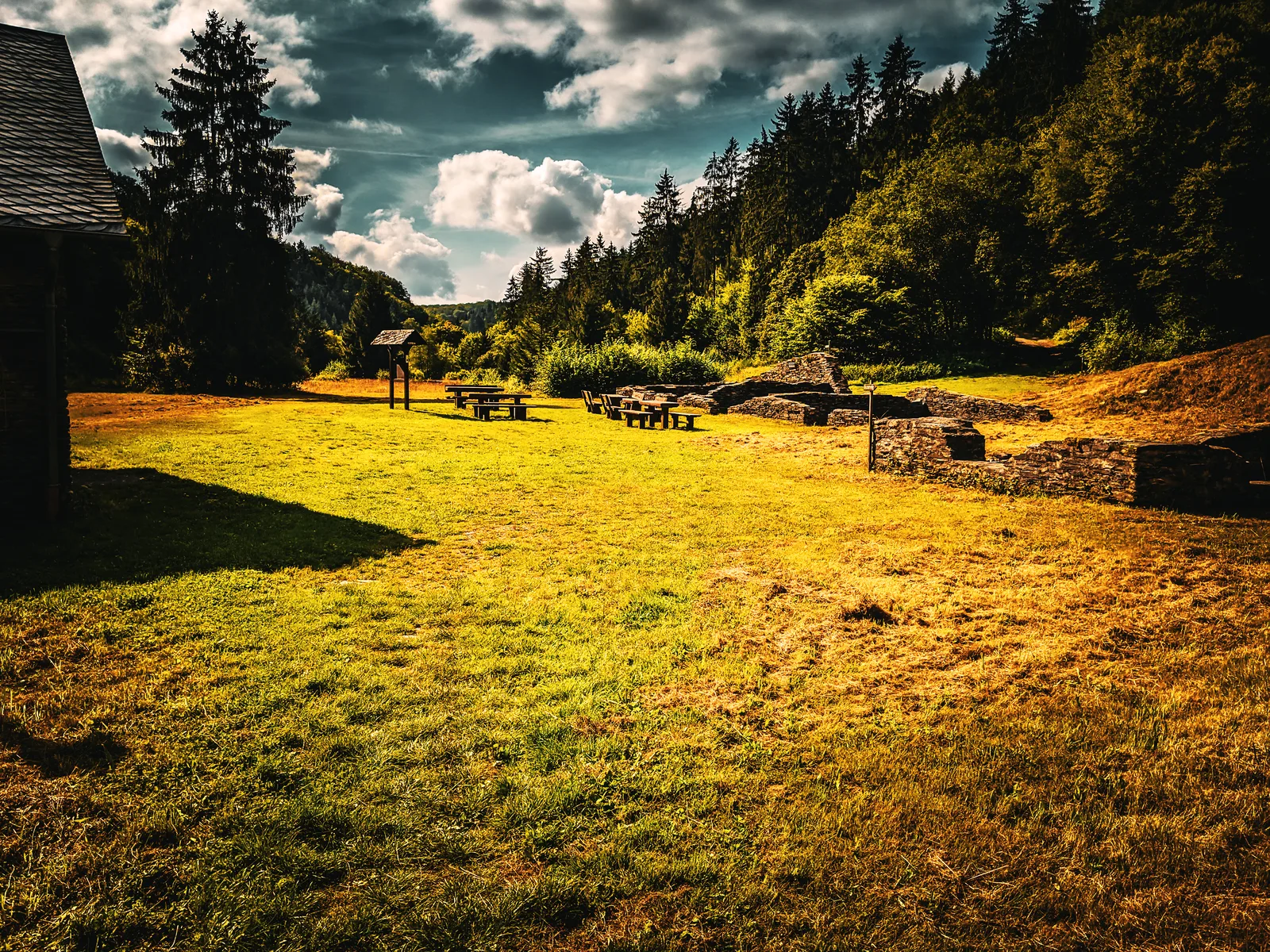
Travel
Traveling from Metropolion Ares works the same way as it does for the Wilde Endert.
Laubach is a great starting point for exploring the Kaulebach Valley. You can easily reach it by bus, which stops at Laubach-Kaulebach. From there, you can follow a path miners once used to reach the mines.
One big advantage is that Bus line 733 runs all year and stops at the old mining villages of Laubach, Müllenbach, and Leienkaul. This makes it simple to plan circular routes for short trips in the area.
Parking is very limited, and there are no official spots for hikers. Taking the bus is the best way to visit the valley. During heat waves, please use public transport to help protect nature. Most forest fires are caused by people, and parking on or near grass is a major risk.
Industrial Transformation
The valley is closely tied to my family history and reminds me that change can happen quickly, even in business. My ancestors from Laubach were miners. My family’s history in Kaisersesch began with a carpenter who first worked in the mines, then established his own business and a small farm outside town.
At that time, nearly every family owned a small farm, known as the Trierer Haus. Farmers also transported slate from the mines to the railway stations in Kaisersesch and Laubach. The Kaulebach Valley was once known for its high-quality slate. In the 1950s, water began seeping into the mines, forcing them to close. Many people then moved to cities like Cologne, Leverkusen, and the Rhine-Main area, where they found new opportunities during the postwar economic boom.
Over the years, new industries moved into the area. The Bundeswehr (Germany’s military) quickly became an important part of the area and still plays a major role in the local economy. Three organizations are particularly notable for their ideas. The St. Martin facilities (inclusionary facilities for disabled people) acted as an early social enterprise—well before the term was common—and now operates in Düngenheim, Ulmen and Kaisersesch, making it among the region’s largest employers. A company based in Laubach has introduced a new concept for organizing exclusive tent events across Germany and Europe. Firework specialists from Müllenbach achieved worldwide recognition for their expertise. Their ancestor founded a gunpowder business for the mines.
For me, transformation is not something to fear or mourn. It is a natural part of life. Change keeps things interesting and helps us grow, even if it feels unsure at times. Traditions can be valuable, but nothing stays the same forever. I think it’s smart to be curious and open to learning new things. Instead of seeing creative destruction as a threat, I believe we can view it as an opportunity to find new possibilities. The region has changed a lot since the 1950s. Today, even knowledge work is evolving with AI. That is interesting and a bit challenging. The outcome will be something new, maybe more welfare. The miners’ lives were hard, and many did not live to old age.
Further Reading
- Kaulebachtal
- Müllenbachtal/Kaulenbachtal — Nature Reserve
- Endert - Wilde Endert
- Eifel42 — Wilde Endert
- Moselle Franconian language
- Südwestdeutsches Einhaus - Trierer Hause
- St. Martin - Düngenheim
- Learning Organizations
- Landesforsten Rheinland Pfalz - Forest Fires
- Umweltbundesamt - Forest Fires